
Craftsman Frederick Aloysius Granton
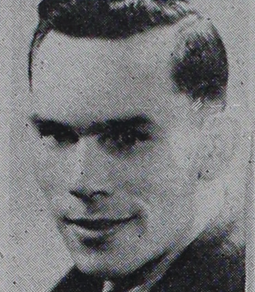
Fred Granton was born in Paris on August 16, 1912, one of six boys with one sister. After attending Sacred Heart School and one year at Paris High School, Fred attended Brantford Tech from 1931-1934 taking night school classes. From 1935-1937 he took an accountancy program at Brantford Business College. His pre-war activities included tennis, swimming, hockey, and softball. Before the war, Fred worked as a Mechanical Engineer with R. Doyle, Paris, and was a painter with Isaac Stewart from 1931-1933. From 1933 – 1940 he worked at Penmans, where he was promised a job on his return from the war as a hosiery boarder.
He was single when he enlisted in the 1st Army Field Workshop, Royal Canadian Ordinance Corps in London, Ontario on July 9, 1940. It was formed in London in 1939 and was deployed overseas to Britain in December 1940 to maintain, repair, and service military equipment for the Canadian Army. His occupation at the time a Motor Vehicle Fitter, Class III. A Motor Vehicle Fitter was a specialized army mechanic tasked with repairing, maintaining, and assembling wheeled and tracked military vehicles, such as trucks, jeeps, and tanks.
Fred’s unit sailed from Halifax on December 14, 1940 and they disembarked in Glasgow on December 26. On February 1, 1941 he qualified as a Fitters Assistant. He remained in the U.K. until August 5, 1943 when he was given permission to marry Enid Mary Metcalf of Eastbourne, Sussex, a member of the Women’s Land Army, though the marriage was not immediate. But it may have led to Fred’s transfer to Sussex.
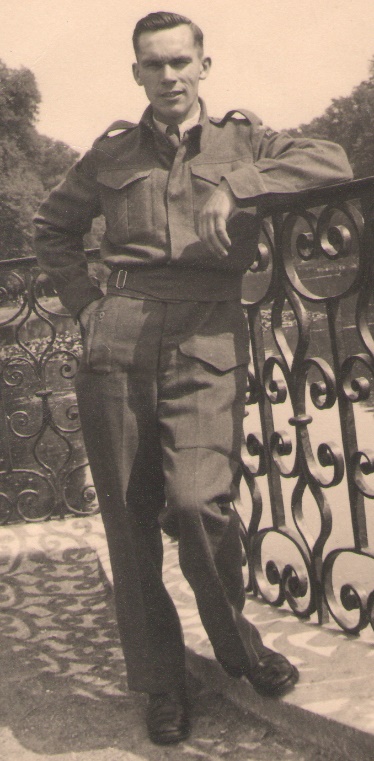
Sussex was very much on the front line. It’s airfields, such as RAF Tangmere and RAF Westhampnett, would play a critical role during the Battle of Britain and after awhile its towns, particularly Eastbourne, were among the most pummelled in the south-east. The county also changed markedly in character because it was garrisoned by British and Canadian units from 1940-42 and again with another massive build-up occurring in the lead-up to D-Day. Personnel and materiel poured in, with landing craft and Mulberry Harbours being assembled off the coast. A Mulberry harbour was a massive, prefabricated artificial harbour designed and built by the British during World War II. They were engineered to solve one of the greatest logistical challenges of the D-Day landings: how to safely unload millions of tons of supplies, vehicles, and troops onto the shallow beaches of Normandy without capturing a heavily fortified French deep-water port first.
The Allied strategy was effectively to "bring their own ports" across the English Channel. All of these preparations would have kept the Ordinance Corps very busy.
An additional problem was the constant German aerial bombardments. The Marks and Spencer store in Eastbourne suffered a direct hit during a World War II air raid on December 18, 1942, while the building was packed with Christmas shoppers. Fred Granton and seven other Canadian soldiers who were billeted in the building behind Marks and Spencers escaped injury and helped with the rescue.
On August 15,1943 his new unit, the 2nd Anti-Aircraft Regiment, sailed to Sicily. They disembarked on August 27, 1943, and joined the Central Mediterranean Force. Between January 1, and August 22, 1944 Fred was admitted to hospital four times, though the causes are not clear. In all, Fred served for 159 days in Canada, 970 days in England, 579 days with the Central Mediterranean Force and 15 days in the Netherlands before being sent home to be discharged. During the war he became a Gun Fitter and later a Craftsman.
The marriage of Fred and Enid finally took place in Eastbourne, Sussex, on May 4, 1945. Fred went home shortly after and Enid came the following year.
He returned to Paris to work in Penmans, living at the Granton family home at 3 William Street where he and Enid raised two children. Fred was active in his church. He also wrote a weekly column in The Paris Star for the Paris Legion. He was a Foreman at Penmans and later spent Friday evening and all day Saturday working with his brother, Bill, the owner of John M. Hall’s. In 1963, when his brother died, Fred took over the management of the store and continued to work at Penmans. After a year, he left Penmans and was the manager full time until he died in 1976. Craftsman Frederick Aloysius Granton is buried at Sacred Heart Cemetery in Paris. His wife Enid’s ashes were scattered over her beloved Sussex Downs.